


During our first week of DSNY11, our cohort began to think about what it takes to be an effective data consultant. To put it extremely simply: clients ask consultants to make things for them to help them achieve a goal. In my first week of training, I discovered that a single request is not nearly enough information to get a client what they want.
On one of the first days of training, we were asked to consider how a dataset with a lot of columns could be separated into a tree ("schematic") of connected data tables, so that only measurable information would need to be retrieved for every new data entry. By the end of 20 minutes of drawing, erasing, and redrawing, my partner and I were confident that we had created the perfect schematic. Everything we did made sense to us, and we thought we had provided the perfect amount of clarity and organization.
When we returned to share our results as a cohort, we were all surprised at the diversity of our schematics! Some groups had been more thorough in splitting the data than others, and one group even designed a variable to create a connection between two of the tangential tables (data about customers and data about shipping locations). None of us had done this task "incorrectly", the prompt itself just left enough room for interpretation and ambiguity that many different outputs were returned.
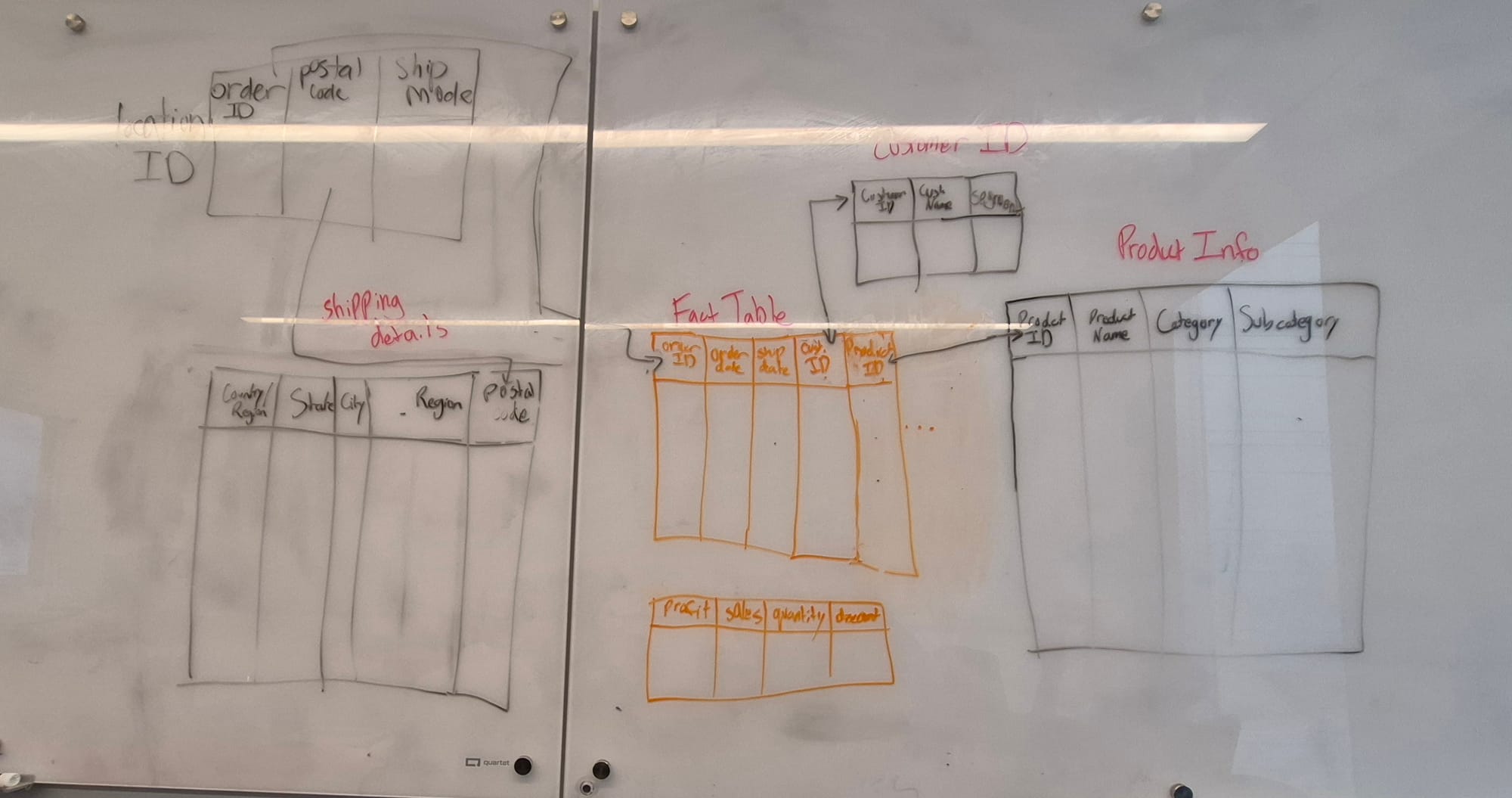
This divergence is novel in a training example, but it can prove costly in real-world scenarios. As a consultant, following your own personal interpretation of a task you are given is sometimes not good enough. A consultant's job is to produce something that would be useful to the work the client has to do. In training this week, we discussed two major ways to avoid these sorts of miscommunications and ensure that clients receiving the analyses they desire.
#1: Ask a lot of questions! (why? why? why?)
Especially in the world of business, employees often become embedded in the weeds of their work. The motivations behind their work may be obvious to them, to the point where they do not feel the need to express the broader implications of a small task request. This is an easy way for a stakeholder's vision and a consultant's work to diverge. For example, a client could ask for an "analysis of this month's sales data", expecting a product by product breakdown of the most and least profitable items. The consultant might instead compare sales data across days of the week (a legitimate analysis!), but this would leave the client dissatisfied and waste the consultant's time.
As silly as it seems, the fastest way past these kinds of miscommunications is by answering a client's request with your own question: "why?". It is a simple question, but it can get you to the core of the client's values and goals. Through asking "why?", you will discover the reasons behind their request, enabling you to provide a useful, values-aligned response to the request. The goal is to find out what the client's request meant, rather than what it said.
If this back-and-forth doesn't happen up front, it may end up playing out over the course of days, meaning that tons of time is wasted making useless visualizations that the client did not really want. Some tough conversation at the start can save you a lot of time later.
#2: Do your own research!
Sometimes, a client might not be available or interested in having a long discussion about the motivations behind their request. One way that a consultant can work proactively to reduce the likelihood of a miscommunication is to learn about the client's industry on their own. A bit of reading on the client's industry from the previous example may have revealed a particular interest in individual product performance, possibly eliminating (at least that first) miscommunication with the client.
Thorough analysis requires tons of decision-making, that a client may not always be on call for. A background understanding of what the client's job is, what their company works on, and what is important to that industry may help guide these decisions and skip past gaps in communication.
Quick Summary
In a role where your main task is fulfilling client requests, it can be tempting to "get them right". As I've learned in my first few days here, "getting it right" can look a lot of different ways, some useful and some not. Being an efficient and successful consultant requires going the extra mile, whether that is interviewing your client to get a more precise idea of their request, or doing outside research on their industry to learn their values.