


Data in Modern Business
Data is used across nearly every part of a modern business.
Organizations use it to understand customers, track performance, improve operations, identify opportunities, predict outcomes, and support better decisions.
But simply having data is not enough. It has to be collected, organized, analyzed, and turned into something useful.
That is where different data roles come in.
Data Analysts, Data Scientists, and Data Engineers all work with data, but they focus on different problems and contribute in different ways.
So, what actually makes them different?
Data Analyst
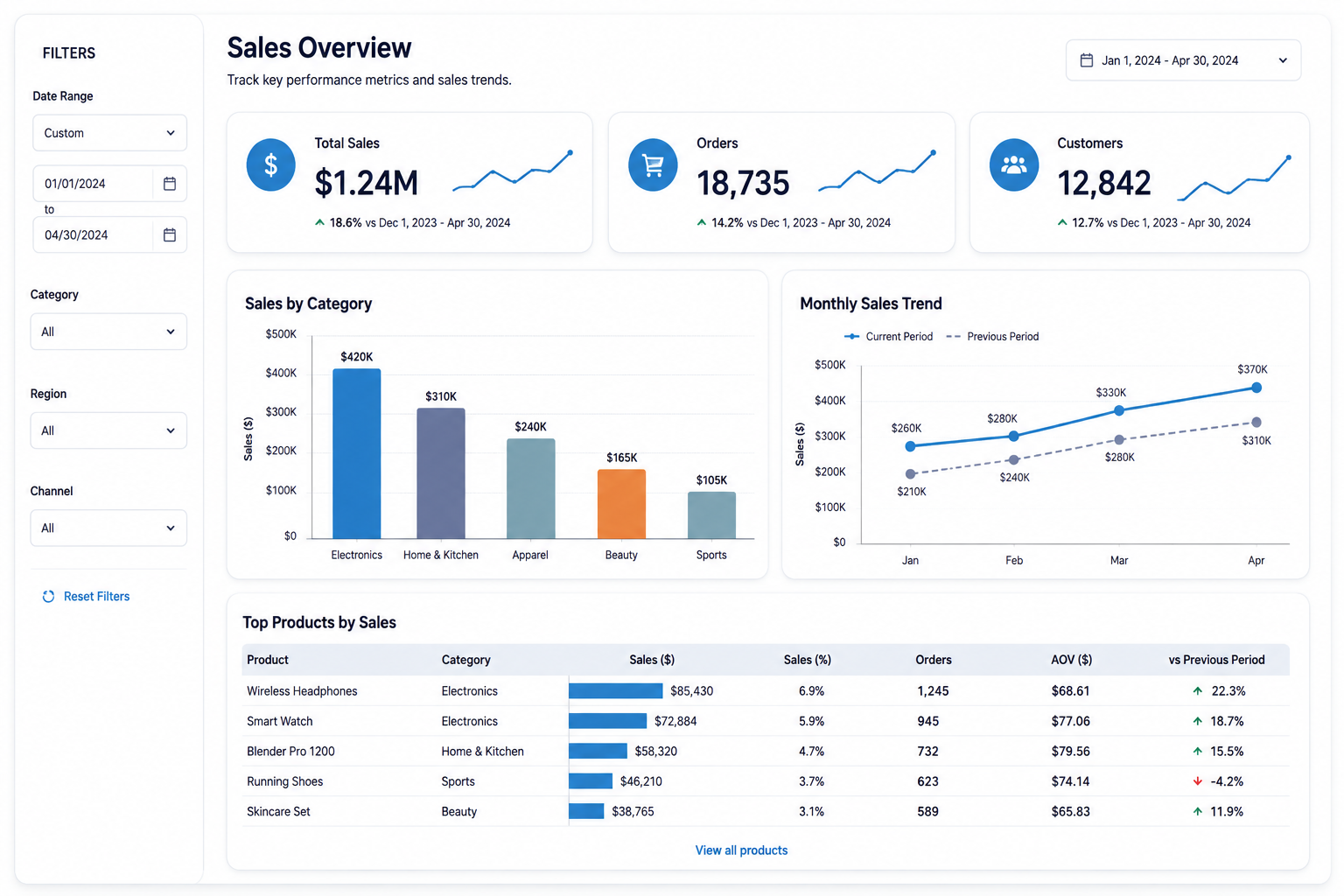
A Data Analyst works with data to answer questions, identify trends, and communicate insights that can support decision-making.
Their work often connects data directly to the business. An analyst may start with a question such as Why did sales decrease last month? or Which products are performing best? and use available data to find an answer.
What Does a Data Analyst Do?
Their work can include:
- Querying and preparing data
- Analyzing trends and patterns
- Tracking metrics and KPIs
- Building reports and dashboards
- Communicating findings
The goal is not simply to create a chart or report. It is to help people understand what the data is telling them.
What Do They Deliver?
Common outputs include:
- Dashboards
- Reports
- Visualizations
- Analysis and insights
Related Roles
Analytics can be applied across many different areas of a business, which is why analyst titles often vary.
Related roles can include:
- Business Intelligence Analyst
- Product Analyst
- Marketing Analyst
- Operations Analyst
The focus may change, but the core idea remains similar: use data to better understand what is happening and support decisions.
Data Scientist
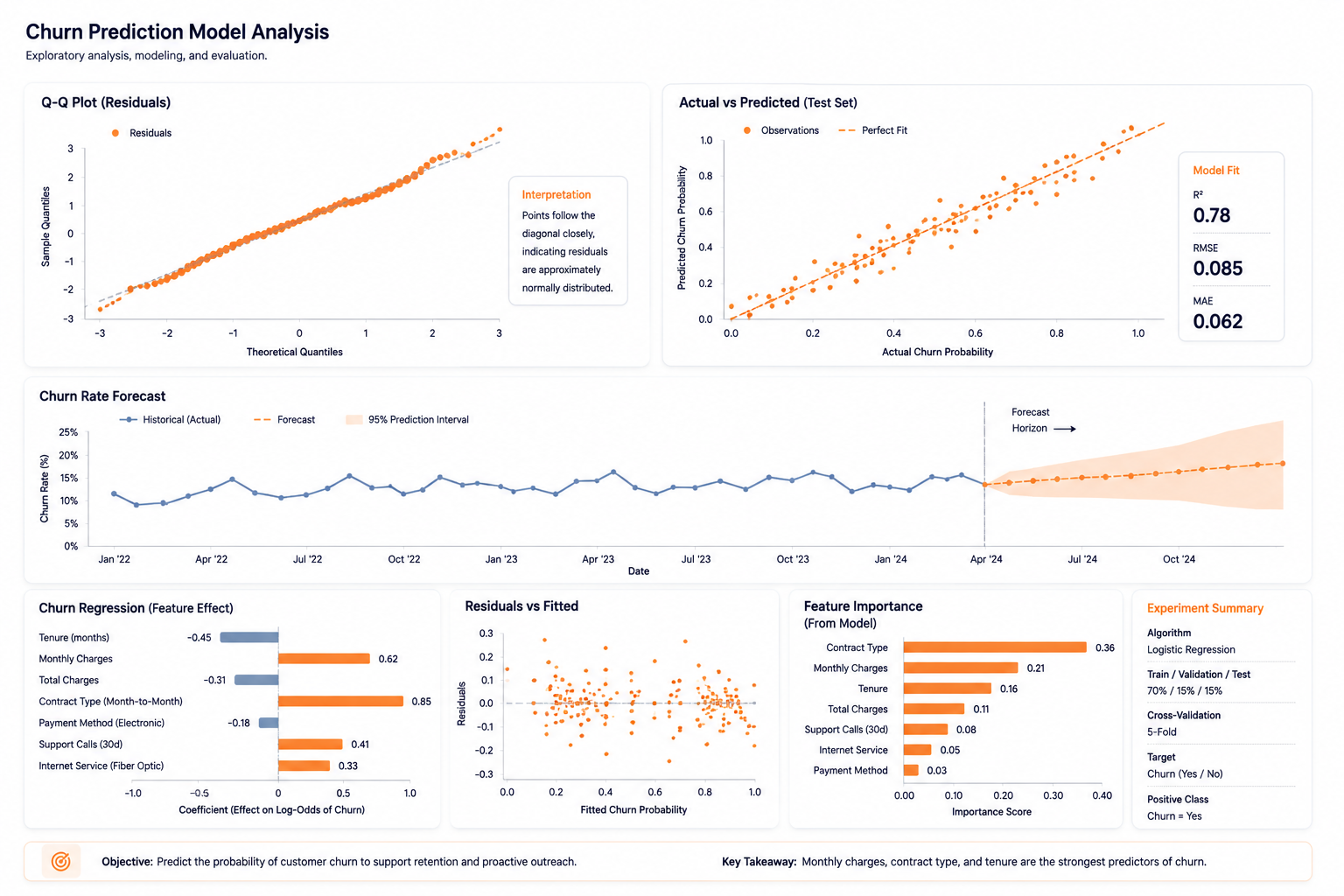
A Data Scientist uses data, statistics, and programming to identify patterns, test ideas, and build models that can explain or predict outcomes.
While analysts often focus on understanding current or historical performance, Data Scientists may use data to explore more complex questions, build models, and predict future outcomes.
For example, instead of asking Which customers stopped purchasing?, a Data Scientist may ask Which customers are most likely to stop purchasing in the future?
What Does a Data Scientist Do?
Their work can include:
- Exploring and preparing data
- Performing statistical analysis
- Building and testing models
- Running experiments
- Evaluating results
A large part of the role involves determining whether patterns in the data can be used to explain, classify, recommend, or predict something useful.
What Do They Deliver?
Common outputs include:
- Predictive models
- Forecasts
- Experiments
- Recommendation or scoring systems
Related Roles
Data science can also take different forms depending on the type of problem being solved.
Related roles may include:
- Applied Scientist
- Machine Learning Scientist
- Decision Scientist
- Research Data Scientist
Some roles may be more focused on statistics and experimentation, while others may work more heavily with machine learning.
Data Engineer
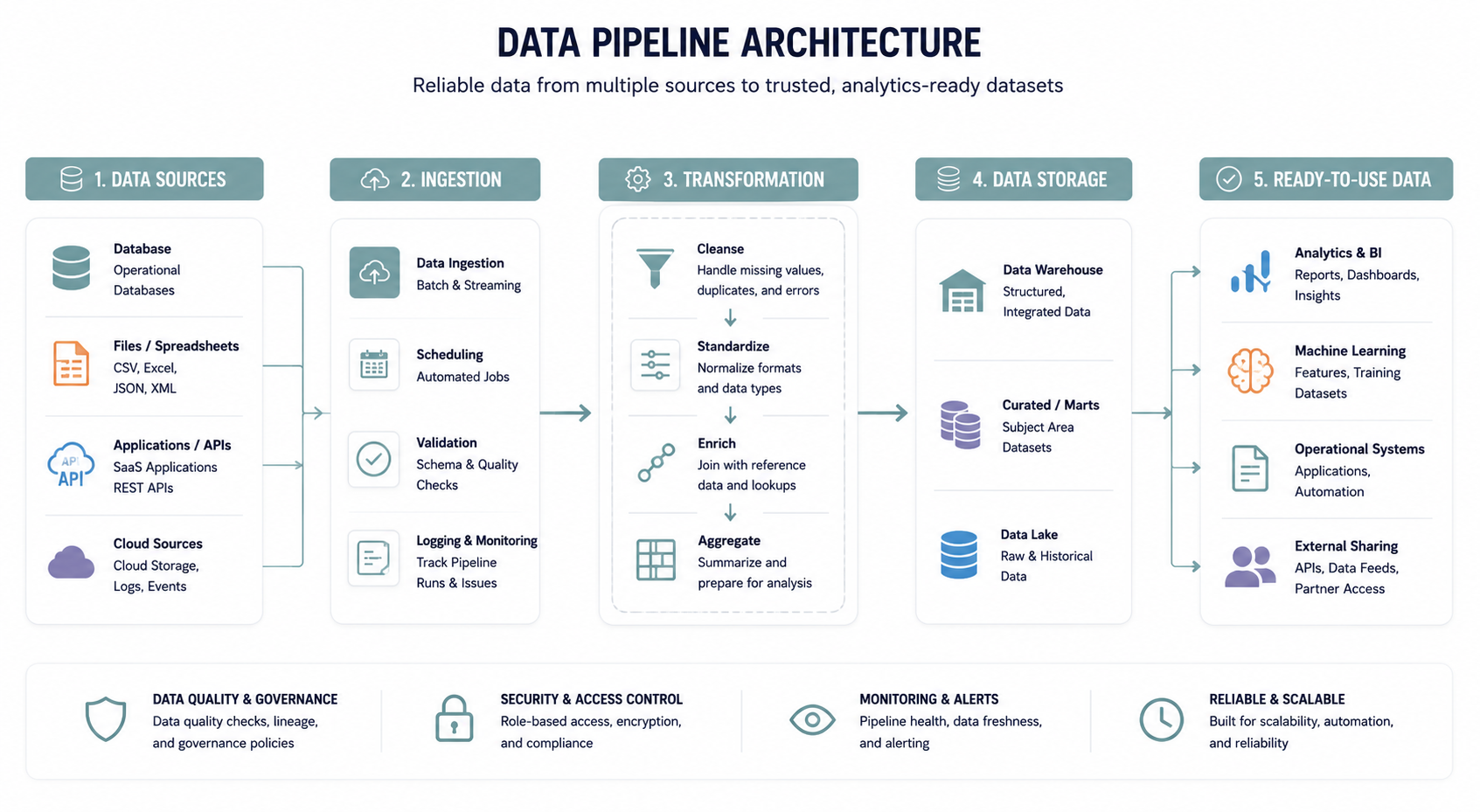
A Data Engineer builds and maintains the systems that collect, move, transform, and store data.
Before an analyst can build a dashboard or a Data Scientist can train a model, the necessary data has to be available, organized, and reliable.
That is where Data Engineers play an important role.
What Does a Data Engineer Do?
Their work can include:
- Building data pipelines
- Integrating data sources
- Transforming and organizing data
- Maintaining data systems
- Monitoring data quality
Rather than primarily analyzing the data itself, Data Engineers focus on the infrastructure and processes that make data usable by others.
What Do They Deliver?
Common outputs include:
- Data pipelines
- Data models
- Curated datasets
- Data infrastructure
Related Roles
Data engineering responsibilities can also appear under several related titles, including:
- Analytics Engineer
- Data Platform Engineer
- Data Warehouse Engineer
- ETL Developer
These roles can differ in focus, but they generally contribute to making data accessible, organized, and dependable.
So, What's the Difference?
All three roles work with data, but their main focus is different.
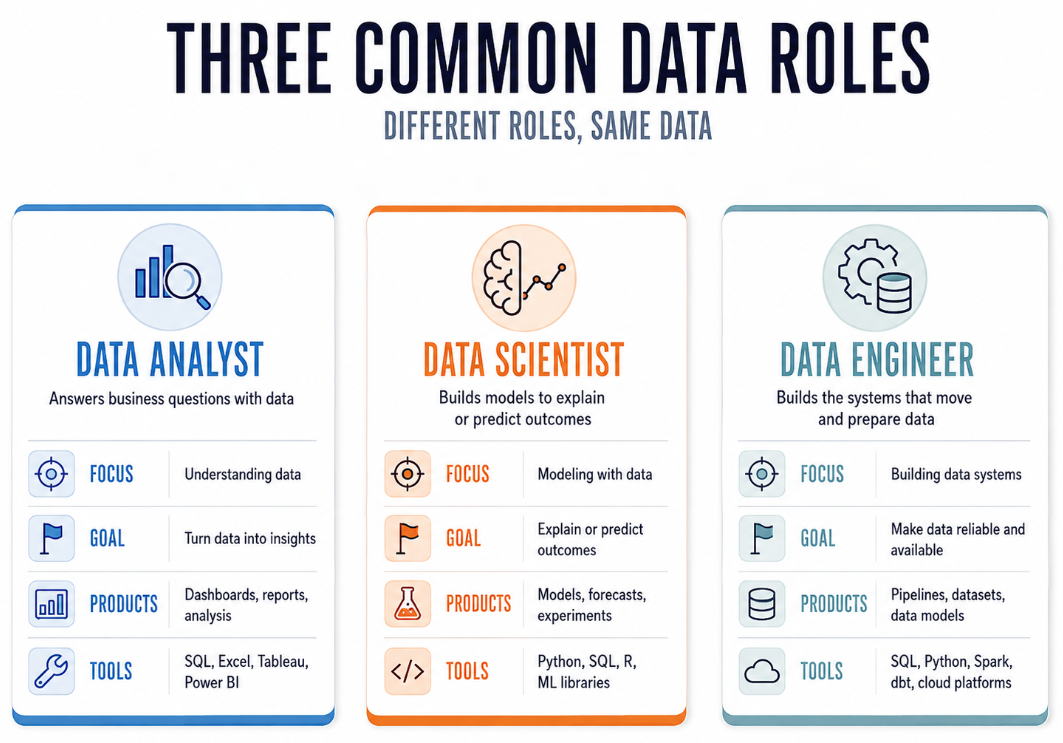
A simple way to think about it is:
- Data Engineer: How do we get reliable data where it needs to go?
- Data Analyst: What is the data telling us?
- Data Scientist: What can the data help us model or predict?
There is also plenty of overlap between the roles. SQL and Python, for example, may appear across all three, and responsibilities can vary depending on the company.
The difference is less about one specific tool and more about the type of problem each role is trying to solve.
Different Roles, Same Data
Data Analysts, Data Scientists, and Data Engineers approach data differently, but their work is often connected.
Data Engineers help make data available and reliable. Data Analysts use it to understand performance and answer questions. Data Scientists use it to build models and explore more complex outcomes.
Different roles, different goals, but all three work with the same underlying resource: data.
Thank you for reading! I hope this helped make the differences between Data Analysts, Data Scientists, and Data Engineers a little clearer.